---
title: "Positioning Yourself as a Credible Non-Executive Director: 8 top tips to get that NED Role"
description: In this blog, we share eight practical tips to help you position yourself as a credible NED candidate and clearly articulate the value you bring.
image: https://www.morganjamesconsulting.co.uk/hubfs/AdobeStock_634192296.jpeg
---
[%20(1).jpg?width=1258&height=206&name=Morgan%20James%20Master%20Logo%20file%20full%20colour%20(RGB)%20(1).jpg "MorganJames")](https://www.morganjamesconsulting.co.uk/)
[](https://www.morganjamesconsulting.co.uk/)
- About
- [About us](https://www.morganjamesconsulting.co.uk/about)
- [Our experts](https://www.morganjamesconsulting.co.uk/our-experts)
- [Testimonials](https://www.morganjamesconsulting.co.uk/testimonials)
- [Programs](https://www.morganjamesconsulting.co.uk/leadership-programmes)
- [Overview](https://www.morganjamesconsulting.co.uk/overview-introduction)
- [Management training](https://www.morganjamesconsulting.co.uk/leadership-programmes/management-training-for-new-managers)
- [Leadership training](https://www.morganjamesconsulting.co.uk/leadership-programmes/step-up-to-leadership-programme)
- [Business growth group](https://www.morganjamesconsulting.co.uk/leadership-programmes/strategic-leadership-program)
- [Executive coaching](https://www.morganjamesconsulting.co.uk/leadership-programmes/executive-coaching-programs)
- [Workshops](https://pages.morganjamesconsulting.co.uk/blog/tag/workshop)
- Resources
- [Webinars](https://www.morganjamesconsulting.co.uk/webinars)
- [Blogs](https://pages.morganjamesconsulting.co.uk/blog/tag/inspiration)
- [Contact us](https://www.morganjamesconsulting.co.uk/contact)
More results
[](https://www.morganjamesconsulting.co.uk/hs/cta/wi/redirect?encryptedPayload=AVxigLLmgiIV3ZvRtUejQZjIeBTq1FhdVFqVlwucHtm6gx4v3SukGUEzxSV6982iW8N18doyPAZgJQx5w6xpWSK64QA5ji69GmOzD6XmrO9LONh2PyOsz7X8s%2FxdeTQAZB4cGOSr9meQQpvryS8gN0zZ9sSSz1nJIA4Py7j8nFXRU5X15ft7jy2a00pFINU2Bnfr1cNMR3YURB2DQYNMunu9&webInteractiveContentId=195811653013&portalId=7689039)
[](https://www.morganjamesconsulting.co.uk/hs/cta/wi/redirect?encryptedPayload=AVxigLLmgiIV3ZvRtUejQZjIeBTq1FhdVFqVlwucHtm6gx4v3SukGUEzxSV6982iW8N18doyPAZgJQx5w6xpWSK64QA5ji69GmOzD6XmrO9LONh2PyOsz7X8s%2FxdeTQAZB4cGOSr9meQQpvryS8gN0zZ9sSSz1nJIA4Py7j8nFXRU5X15ft7jy2a00pFINU2Bnfr1cNMR3YURB2DQYNMunu9&webInteractiveContentId=195811653013&portalId=7689039)
[](https://www.morganjamesconsulting.co.uk/hs/cta/wi/redirect?encryptedPayload=AVxigLLmgiIV3ZvRtUejQZjIeBTq1FhdVFqVlwucHtm6gx4v3SukGUEzxSV6982iW8N18doyPAZgJQx5w6xpWSK64QA5ji69GmOzD6XmrO9LONh2PyOsz7X8s%2FxdeTQAZB4cGOSr9meQQpvryS8gN0zZ9sSSz1nJIA4Py7j8nFXRU5X15ft7jy2a00pFINU2Bnfr1cNMR3YURB2DQYNMunu9&webInteractiveContentId=195811653013&portalId=7689039)
- About
- [About us](https://www.morganjamesconsulting.co.uk/about)
- [Our experts](https://www.morganjamesconsulting.co.uk/our-experts)
- [Testimonials](https://www.morganjamesconsulting.co.uk/testimonials)
- [Programs](https://www.morganjamesconsulting.co.uk/leadership-programmes)
- [Overview](https://www.morganjamesconsulting.co.uk/overview-introduction)
- [Management training](https://www.morganjamesconsulting.co.uk/leadership-programmes/management-training-for-new-managers)
- [Leadership training](https://www.morganjamesconsulting.co.uk/leadership-programmes/step-up-to-leadership-programme)
- [Business growth group](https://www.morganjamesconsulting.co.uk/leadership-programmes/strategic-leadership-program)
- [Executive coaching](https://www.morganjamesconsulting.co.uk/leadership-programmes/executive-coaching-programs)
- [Workshops](https://pages.morganjamesconsulting.co.uk/blog/tag/workshop)
- Resources
- [Webinars](https://www.morganjamesconsulting.co.uk/webinars)
- [Blogs](https://pages.morganjamesconsulting.co.uk/blog/tag/inspiration)
- [Contact us](https://www.morganjamesconsulting.co.uk/contact)
[](https://www.morganjamesconsulting.co.uk/hs/cta/wi/redirect?encryptedPayload=AVxigLLmgiIV3ZvRtUejQZjIeBTq1FhdVFqVlwucHtm6gx4v3SukGUEzxSV6982iW8N18doyPAZgJQx5w6xpWSK64QA5ji69GmOzD6XmrO9LONh2PyOsz7X8s%2FxdeTQAZB4cGOSr9meQQpvryS8gN0zZ9sSSz1nJIA4Py7j8nFXRU5X15ft7jy2a00pFINU2Bnfr1cNMR3YURB2DQYNMunu9&webInteractiveContentId=195811653013&portalId=7689039)

[+44 (0)1606 883383](tel:%20#01606%20883383)
[admin@morganjamesconsulting.co.uk](mailto:admin@morganjamesconsulting.co.uk)
Morgan James Consulting, The Orchard, Grange Lane, Whitegate, Cheshire, CW8 2BQ, UK
All Topics
[All Topics](https://www.morganjamesconsulting.co.uk/blog)[Inspiration](https://www.morganjamesconsulting.co.uk/blog/tag/inspiration)[Workshop](https://www.morganjamesconsulting.co.uk/blog/tag/workshop)[Uncategorized](https://www.morganjamesconsulting.co.uk/blog/tag/uncategorized)[Holistic Leadership](https://www.morganjamesconsulting.co.uk/blog/tag/holistic-leadership)[Business](https://www.morganjamesconsulting.co.uk/blog/tag/business)[Leadership Training](https://www.morganjamesconsulting.co.uk/blog/tag/leadership-training)[Company Mergers](https://www.morganjamesconsulting.co.uk/blog/tag/company-mergers)[Introvert Leadership](https://www.morganjamesconsulting.co.uk/blog/tag/introvert-leadership)[Value Building Behaviours](https://www.morganjamesconsulting.co.uk/blog/tag/value-building-behaviours)
# Positioning Yourself as a Credible Non-Executive Director: 8 top tips to get that NED Role
By [**Lily Newman**](https://www.morganjamesconsulting.co.uk/blog/author/lilynewman) on Feb 10, 2026

For many senior leaders, a Non-Executive Director role is a natural next step, but it is not something you simply step into based on reputation alone. Boards are looking for people who can bring a fresh perspective, independent judgement, commercial challenge and calm oversight, without drifting into executive mode.
In this blog, we share eight practical tips to help you position yourself as a credible NED candidate and clearly articulate the value you bring. Whether you are exploring your first appointment or sharpening your board portfolio, these ideas will help you show how you can support stronger strategy, better decision-making and help to develop more resilient, high-performing businesses.
### 1. Get crystal clear on your 'board value proposition'
Boards don’t recruit for job titles; they recruit for outcomes. By defining 2–3 strengths you bring at board level, the value you add is clear and concise, demonstrating your approach from the get-go. Whether your strengths include scaling operations, improving turnaround, increasing commercial growth, risk governance, people/culture or digital transformation, you must be able to identify these and understand their value to be able to present this most effectively.
Top tip! Write it as: **“I help boards achieve X by doing Y, evidenced by Z.”**
### 2. Choose a deliberate lane (sector & company stage)
Being “open to anything” can come across as unfocused. Pick a clear target: sector(s), size band, and situation (high growth, PE-backed, founder-led, turnaround, regulated, international expansion). By avoiding being a generalist, you’ll become easier to place, and you’ll also show that you understand the situation you can best add value to.
### 3. Translate executive achievements into board-level impact
Boards care about strategic choices, risk, resilience, governance, and sustainable performance.
Reframe your track record from “what I managed” to **what I changed**: revenue mix, margin improvement, cash conversion, customer retention, risk reduction, improved leadership capability, better decision cadence.
By delivering information as outcomes, you present your skillset through evidential transformation, rather than a task list. This is what makes the difference between executive leadership and NED impacts, avoiding menial or operational points and focusing on the things that matter to your targeted business.
### 4. Build a board-ready profile (not an executive CV)
Create a short board bio that highlights governance awareness, independent challenge, financial acumen, stakeholder management, and the lens you bring to the business (commercial, people, risk, transformation).
Make sure to add 3–5 “board proof points” (big decisions influenced, crises navigated, governance strengthened, strategy reset, M&A integration, culture shifts) to really showcase the impact you can bring.
### 5. Demonstrate you can challenge and support
Great NEDs are constructively independent: they ask hard questions without becoming combative.
Practise board-style contribution: fewer opinions, more incisive questions like:
- “What must be agreed for this plan to work?”
- “What are we not measuring that could hurt us later?”
- “Where is the risk concentrated, and what’s our mitigation plan?”
This places you as a valued member of the team, bringing respectful challenge to ensure all plans and actions are executed efficiently and successfully.
### 6. Get credible 'pre-board' experience
If you’re not yet a NED, build evidence in adjacent roles: advisory boards, charity/trustee roles, industry bodies, committees, or mentoring scale-ups.
The goal is to show you can operate without executive authority, influence through laser-sharp questions, and contribution to governance-quality decisions.
### 7. Show how you help boards build stronger businesses
In conversations, bring a simple framework that signals maturity and usefulness:
- **Strategy:** clarity, priorities, and trade-offs
- **Performance:** the right measures, leading indicators, accountability
- **Risk & resilience:** scenario thinking, controls, decision quality
- **People & culture:** leadership depth, clarity of vision, succession, behaviours, alignment
It can often be beneficial to offer a “first 90 days” contribution plan: what you’d listen for, what you’d review, and what you’d aim to strengthen. This demonstrates your ability to forward think and exudes a subtle confidence in your experience, methods and skills.
### 8. Network with intent and be selective about roles
Most NED opportunities come through relationships and reputation. Building a small, focused network of chairs, existing NEDs, investors, founders, and sector connectors is vital in the early stages of your journey as a NED. By surrounding yourself with like-minded leaders, opportunities by recommendation are more likely to be suited to your style and approach.
Whilst venturing into this world, it can be tempting to jump straight into your first offer; however, it is so important to be selective: the right board match protects your reputation and increases your impact. Do due diligence on culture, chair style, financial position, and the real reason that your prospective company wants a NED.
Ultimately, securing a NED role is not about seniority or title, but about clearly articulating where you add value, demonstrating sound judgement, and showing that you can help boards make better decisions and build stronger, more resilient businesses.
Topics: [Inspiration](https://www.morganjamesconsulting.co.uk/blog/tag/inspiration)
- Recent
- Topics
- Archive
Recent
Topics
- [Inspiration (71)](https://www.morganjamesconsulting.co.uk/blog/tag/inspiration)
- [Workshop (11)](https://www.morganjamesconsulting.co.uk/blog/tag/workshop)
- [Uncategorized (8)](https://www.morganjamesconsulting.co.uk/blog/tag/uncategorized)
- [Holistic Leadership (5)](https://www.morganjamesconsulting.co.uk/blog/tag/holistic-leadership)
- [Business (3)](https://www.morganjamesconsulting.co.uk/blog/tag/business)
- [Leadership Training (3)](https://www.morganjamesconsulting.co.uk/blog/tag/leadership-training)
- [Company Mergers (1)](https://www.morganjamesconsulting.co.uk/blog/tag/company-mergers)
- [Introvert Leadership (1)](https://www.morganjamesconsulting.co.uk/blog/tag/introvert-leadership)
- [Value Building Behaviours (1)](https://www.morganjamesconsulting.co.uk/blog/tag/value-building-behaviours)
See all
Archive
- [June 2026 (1)](https://www.morganjamesconsulting.co.uk/blog/archive/2026/06)
- [May 2026 (1)](https://www.morganjamesconsulting.co.uk/blog/archive/2026/05)
- [April 2026 (2)](https://www.morganjamesconsulting.co.uk/blog/archive/2026/04)
- [March 2026 (1)](https://www.morganjamesconsulting.co.uk/blog/archive/2026/03)
- [February 2026 (1)](https://www.morganjamesconsulting.co.uk/blog/archive/2026/02)
- [January 2026 (2)](https://www.morganjamesconsulting.co.uk/blog/archive/2026/01)
- [December 2025 (2)](https://www.morganjamesconsulting.co.uk/blog/archive/2025/12)
- [November 2025 (1)](https://www.morganjamesconsulting.co.uk/blog/archive/2025/11)
- [October 2025 (3)](https://www.morganjamesconsulting.co.uk/blog/archive/2025/10)
- [September 2025 (13)](https://www.morganjamesconsulting.co.uk/blog/archive/2025/09)
- [August 2025 (2)](https://www.morganjamesconsulting.co.uk/blog/archive/2025/08)
- [July 2025 (2)](https://www.morganjamesconsulting.co.uk/blog/archive/2025/07)
- [June 2025 (1)](https://www.morganjamesconsulting.co.uk/blog/archive/2025/06)
- [May 2025 (2)](https://www.morganjamesconsulting.co.uk/blog/archive/2025/05)
- [April 2025 (1)](https://www.morganjamesconsulting.co.uk/blog/archive/2025/04)
- [February 2025 (1)](https://www.morganjamesconsulting.co.uk/blog/archive/2025/02)
- [January 2025 (1)](https://www.morganjamesconsulting.co.uk/blog/archive/2025/01)
- [December 2024 (1)](https://www.morganjamesconsulting.co.uk/blog/archive/2024/12)
- [November 2024 (1)](https://www.morganjamesconsulting.co.uk/blog/archive/2024/11)
- [August 2024 (1)](https://www.morganjamesconsulting.co.uk/blog/archive/2024/08)
- [July 2024 (1)](https://www.morganjamesconsulting.co.uk/blog/archive/2024/07)
- [May 2024 (1)](https://www.morganjamesconsulting.co.uk/blog/archive/2024/05)
- [February 2024 (1)](https://www.morganjamesconsulting.co.uk/blog/archive/2024/02)
- [March 2023 (1)](https://www.morganjamesconsulting.co.uk/blog/archive/2023/03)
- [December 2022 (1)](https://www.morganjamesconsulting.co.uk/blog/archive/2022/12)
- [October 2022 (1)](https://www.morganjamesconsulting.co.uk/blog/archive/2022/10)
- [April 2022 (1)](https://www.morganjamesconsulting.co.uk/blog/archive/2022/04)
- [December 2021 (2)](https://www.morganjamesconsulting.co.uk/blog/archive/2021/12)
- [November 2021 (1)](https://www.morganjamesconsulting.co.uk/blog/archive/2021/11)
- [October 2021 (1)](https://www.morganjamesconsulting.co.uk/blog/archive/2021/10)
- [August 2021 (1)](https://www.morganjamesconsulting.co.uk/blog/archive/2021/08)
- [March 2021 (2)](https://www.morganjamesconsulting.co.uk/blog/archive/2021/03)
- [February 2021 (5)](https://www.morganjamesconsulting.co.uk/blog/archive/2021/02)
- [January 2021 (1)](https://www.morganjamesconsulting.co.uk/blog/archive/2021/01)
- [December 2020 (1)](https://www.morganjamesconsulting.co.uk/blog/archive/2020/12)
- [November 2020 (2)](https://www.morganjamesconsulting.co.uk/blog/archive/2020/11)
- [October 2020 (1)](https://www.morganjamesconsulting.co.uk/blog/archive/2020/10)
- [September 2020 (10)](https://www.morganjamesconsulting.co.uk/blog/archive/2020/09)
- [August 2020 (3)](https://www.morganjamesconsulting.co.uk/blog/archive/2020/08)
- [July 2020 (1)](https://www.morganjamesconsulting.co.uk/blog/archive/2020/07)
- [June 2020 (4)](https://www.morganjamesconsulting.co.uk/blog/archive/2020/06)
- [May 2020 (2)](https://www.morganjamesconsulting.co.uk/blog/archive/2020/05)
- [January 2020 (1)](https://www.morganjamesconsulting.co.uk/blog/archive/2020/01)
- [December 2019 (3)](https://www.morganjamesconsulting.co.uk/blog/archive/2019/12)
See all
### Subscribe by email
Share this
[Share on X](https://x.com/intent/post?url=https://www.morganjamesconsulting.co.uk/blog/positioning-yourself-as-a-credible-non-executive-director-8-top-tips-to-get-that-ned-role&text=Positioning+Yourself+as+a+Credible+Non-Executive+Director%3A+8+top+tips+to+get+that+NED+Role) [Share on Facebook](https://www.facebook.com/sharer/sharer.php?u=https://www.morganjamesconsulting.co.uk/blog/positioning-yourself-as-a-credible-non-executive-director-8-top-tips-to-get-that-ned-role&t=Positioning+Yourself+as+a+Credible+Non-Executive+Director%3A+8+top+tips+to+get+that+NED+Role) [Share on LinkedIn](https://www.linkedin.com/shareArticle?mini=true&url=https://www.morganjamesconsulting.co.uk/blog/positioning-yourself-as-a-credible-non-executive-director-8-top-tips-to-get-that-ned-role&t=Positioning+Yourself+as+a+Credible+Non-Executive+Director%3A+8+top+tips+to+get+that+NED+Role)
Previous story
[← Using Emotional Intelligence to Build Effective Leaders](https://www.morganjamesconsulting.co.uk/blog/using-emotional-intelligence-to-build-effective-leaders)
Next story
[The Spring Reset: A Leader's Guide to Re-Energising Their Team →](https://www.morganjamesconsulting.co.uk/blog/the-spring-reset-a-leaders-guide-to-re-energising-their-team)
## You May Also Like
These Related Stories
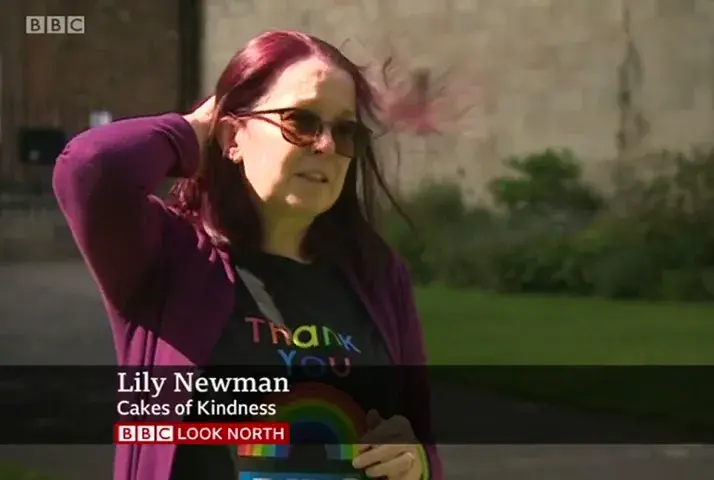
[BBC Look North - Lily Newman Delivers 10,000th Cake of Kindness](https://www.morganjamesconsulting.co.uk/blog/bbc-look-north-lily-newman-delivers-10000th-cake-of-kindness)
[Inspiration](https://www.morganjamesconsulting.co.uk/blog/tag/inspiration)
### BBC Look North - Lily Newman Delivers 10,000th Cake of Kindness
As featured on the BBC show, Look North (Yorkshire), over the weekend Lily Newman delivered the 10,000th Cake of Kindnes …
Aug 03, 2020 1 min read
[Gearing Back Up for Business? You Need a Detailed Plan says our HR Expert, Karen Knight](https://www.morganjamesconsulting.co.uk/blog/gearing-back-up-for-business-you-need-a-detailed-plan-says-our-hr-expert-karen-knight)

[Inspiration](https://www.morganjamesconsulting.co.uk/blog/tag/inspiration)
### Gearing Back Up for Business? You Need a Detailed Plan says our HR Expert, Karen Knight
With Boris Johnson pledging to give us his government’s latest thinking on ‘life after lockdown’ by the end of the week, …
May 07, 2020 4 min read
[Take control of your thinking to reduce stress and build your resilience.](https://www.morganjamesconsulting.co.uk/blog/take-control-of-your-thinking-to-reduce-stress-and-build-your-resilience)

[Inspiration](https://www.morganjamesconsulting.co.uk/blog/tag/inspiration)
### Take control of your thinking to reduce stress and build your resilience.
By Lily Newman and Nicola Jackson “The greatest weapon against stress is our ability to choose one thought over another” …
Nov 19, 2020 5 min read
### No Comments Yet
Let us know what you think
[](https://www.morganjamesconsulting.co.uk/)
The Orchard, Grange Lane, Whitegate, Cheshire, CW8 2BQ
[+44 (0)1606 88338](tel:%20#01606%2088338)
[admin@morganjamesconsulting.co.uk](mailto:admin@morganjamesconsulting.co.uk)
VAT no: 104 678 809
Company no: 09815128
About
- [About Us](https://www.morganjamesconsulting.co.uk/about)
- [Our experts](https://www.morganjamesconsulting.co.uk/our-experts)
- [Testimonials](https://www.morganjamesconsulting.co.uk/testimonials)
- [Workshops](https://pages.morganjamesconsulting.co.uk/blog/tag/workshop)
Programs
- [Overview](https://www.morganjamesconsulting.co.uk/overview-introduction)
- [Management training](https://www.morganjamesconsulting.co.uk/leadership-programmes/management-training-for-new-managers)
- [Leadership training](https://www.morganjamesconsulting.co.uk/leadership-programmes/step-up-to-leadership-programme)
- [Business growth groups](https://www.morganjamesconsulting.co.uk/leadership-programmes/strategic-leadership-program)
- [Executive coaching](https://www.morganjamesconsulting.co.uk/leadership-programmes/executive-coaching-programs)
Resources
- [Blogs](https://www.morganjamesconsulting.co.uk/blog)
- [Book a consultation](https://www.morganjamesconsulting.co.uk/book-a-consultation)
- [Step into management quiz](https://www.morganjamesconsulting.co.uk/step-into-management-landing-page-quiz)
Copyright © Morgan James 2026. Designed and Developed by [JDR Group.](https://www.jdrgroup.co.uk)
- [Terms](https://www.morganjamesconsulting.co.uk/terms-conditions)
- [Privacy](https://www.morganjamesconsulting.co.uk/privacy-policy)
- [Cookie](https://www.morganjamesconsulting.co.uk/cookie-policy)
```json
{
"@context" : "https://schema.org",
"@type" : "BlogPosting",
"author" : {
"@type" : "Person",
"name" : "Lily Newman",
"url" : "https://www.morganjamesconsulting.co.uk/blog/author/lilynewman"
},
"dateModified" : "2026-02-18T08:15:26.896Z",
"datePublished" : "2026-02-10T15:36:01.000Z",
"headline" : "Positioning Yourself as a Credible Non-Executive Director: 8 top tips to get that NED Role",
"image" : [ "https://www.morganjamesconsulting.co.uk/hubfs/AdobeStock_634192296.jpeg" ],
"mainEntityOfPage" : {
"@id" : "https://www.morganjamesconsulting.co.uk/blog/positioning-yourself-as-a-credible-non-executive-director-8-top-tips-to-get-that-ned-role",
"@type" : "WebPage"
},
"publisher" : {
"@type" : "Organization",
"logo" : {
"@type" : "ImageObject",
"url" : "https://www.morganjamesconsulting.co.uk/hubfs/Morgan-James-Master-Logo-file-white-Morgan-RGB.png"
}
}
}
```
```json
{
"@context" : "https://schema.org",
"@type" : "LocalBusiness",
"address" : {
"@type" : "PostalAddress",
"addressCountry" : "UK",
"addressLocality" : "Cheshire",
"postalCode" : "CW8 2BQ",
"streetAddress" : "The Orchard, Grange Lane, Whitegate"
},
"alternateName" : "Morgan James Consulting",
"contactPoint" : {
"@type" : "ContactPoint",
"areaServed" : "GB",
"availableLanguage" : "en",
"contactType" : "customer service",
"telephone" : "01606 883383"
},
"geo" : {
"@type" : "GeoCoordinates",
"latitude" : 53.2276,
"longitude" : -2.6104
},
"image" : "https://www.morganjamesconsulting.co.uk/wp-content/uploads/2020/05/Kate-Hannah-Rob-lovely-pic-scaled.jpg",
"logo" : "https://www.morganjamesconsulting.co.uk/wp-content/uploads/2022/01/Morgan-James-Master-Logo-file-white-Morgan-RGB-Smaller.png",
"name" : "Morgan James Consulting",
"openingHours" : [ "Mo-Fr 09:00-17:30", "Sa Closed", "Su Closed" ],
"priceRange" : "£",
"sameAs" : [ "https://www.facebook.com/MorganJamesConsulting/", "https://x.com/TuesdayClubGirl", "https://www.linkedin.com/company/morgan-james-consulting/" ],
"telephone" : "01606 883383",
"url" : "https://www.morganjamesconsulting.co.uk/"
}
```
```json
{
"@context" : "https://schema.org",
"@type" : "WebPage",
"description" : "In this blog, we share eight practical tips to help you position yourself as a credible NED candidate and clearly articulate the value you bring. ",
"inLanguage" : "en-GB",
"name" : "Positioning Yourself as a Credible Non-Executive Director: 8 top tips to get that NED Role",
"publisher" : {
"@type" : "Organization",
"logo" : {
"@type" : "ImageObject",
"url" : "https://www.morganjamesconsulting.co.uk/hs-fs/hubfs/Morgan_James_Theme/Morgan-James-Master-Logo-file-white-Morgan-RGB.webp"
},
"name" : "Morgan James Consulting",
"url" : "https://www.morganjamesconsulting.co.uk/"
},
"url" : "https://www.morganjamesconsulting.co.uk/blog/positioning-yourself-as-a-credible-non-executive-director-8-top-tips-to-get-that-ned-role"
}
```
```json
{
"@context" : "https://schema.org",
"@type" : "BreadcrumbList",
"itemListElement" : [ {
"@type" : "ListItem",
"item" : "https://www.morganjamesconsulting.co.uk/",
"name" : "Home",
"position" : 1
}, {
"@type" : "ListItem",
"item" : "https://www.morganjamesconsulting.co.uk/blog/positioning-yourself-as-a-credible-non-executive-director-8-top-tips-to-get-that-ned-role",
"name" : "Positioning Yourself as a Credible Non-Executive Director: 8 top tips to get that NED Role",
"position" : 2
} ]
}
```